


Are you looking to reduce your carbon footprint and save on electricity costs? Look no further than a 180-ah Solar Battery. This powerful and eco-friendly battery can store energy from the sun, allowing you to power your home or business with clean, renewable energy. This blog post will guide you through the steps to utilise your 180ah Solar Battery effectively. From choosing the right battery for your needs to proper maintenance and usage, we’ve got you covered. So, let’s dive in and discover how you can go green with a 180-ah Solar Battery.
Understanding the Basics of a 180-AH Solar Battery
A 180-ah Solar Battery is a type of deep-cycle battery specifically designed to be recharged and discharged daily, making it ideal for solar power systems. These batteries are characterised by their ability to store a significant amount of energy, allowing users to harness the power generated from solar panels during the day and utilise it as needed.
The “AH” stands for ampere-hour, a unit that measures the battery’s energy storage capacity. A 180AH battery can theoretically supply 180 amperes of current for one hour or a lower amperage over a longer period, making it a reliable source for powering homes or businesses off the grid or in conjunction with a grid-tied system.
The efficiency and performance of a 180-ah Solar Battery depend on several factors, including the battery technology (such as lithium-ion, lead-acid, or AGM), the depth of discharge (DoD), and the operating environment. Each aspect influences how well the battery integrates with solar panels to create an efficient and sustainable energy system. Understanding these fundamentals is crucial for anyone looking to invest in a solar battery system, ensuring they select the right battery to meet their renewable energy needs.
Assessing Your Energy Needs
Calculating your energy consumption to optimise the use of your 180-ah Solar Battery is an initial step. List all electrical appliances and devices you intend to power, noting their wattage and usage duration. This inventory helps you understand your daily energy requirement, guiding the selection of an adequate number of batteries to meet your needs.
Factoring in your lifestyle or business operations is crucial; whether your energy usage peaks during the day or evening affects how you should configure your solar power system. This assessment is foundational, ensuring that your setup caters to your immediate energy demands and accommodates potential future expansions.
Optimal Installation Practices for 12v 180a Batteries
Attention to detail is paramount for an optimal installation of your 12v 180-ah Solar Battery. Begin by selecting a site that ensures the battery remains cool, avoiding areas that are prone to high temperatures. Excessive heat can significantly reduce the battery’s efficiency and lifespan. Securing the battery in a stable position is vital to prevent any movement that could loosen connections.
When connecting your 12v 180a battery to the solar panels, utilise high-quality cables and connectors to ensure a stable and efficient energy flow. Moreover, the installation should allow easy access to regular maintenance checks, including terminal cleaning, and guarantee that the connections remain tight and corrosion-free. Implementing these practices will contribute significantly to your solar energy system’s safe and effective operation.
Pairing Your Solar Battery with the Right Solar Panels
To enhance the performance of your 180-ah Solar Battery, it is imperative to match it with compatible solar panels. The panels should meet and ideally exceed the battery’s charging requirements to ensure efficient energy accumulation, even on days with limited sunlight.
The output voltage of the solar panels should align with the battery to facilitate direct charging without additional conversion devices. Considering the system’s total wattage and the panels’ energy yield capabilities will dictate the charging speed and efficiency.
Moreover, the physical installation area for these panels should be optimised to capture maximum sunlight, factoring in geographical orientation and potential obstructions that could cast shadows. Selecting panels well suited to your specific conditions is a critical step towards achieving a sustainable and efficient solar power system.
Understanding the Charge Cycle of a 12v 180 Ah Battery
The charge cycle of a 180-ah Solar Battery encompasses the process from fully charging to discharging and then recharging back to full capacity. It’s essential to grasp this concept, as it significantly impacts the battery’s performance and durability. Typically, these batteries are designed to endure hundreds of cycles, but to extend their service life, it’s advisable to avoid complete discharges.
Instead, aim to maintain the 12v 180 Ah Battery charge within the optimal range, usually between 20% to 80% of its full capacity. This practice prevents the stress that deep discharges can impose on the battery, enhancing its efficiency and prolonging its lifespan. Observing this principle ensures that stored energy is readily available while safeguarding the battery’s health.
Maintenance Tips for Your 180-AH Solar Battery in Points
By following these maintenance tips, you can ensure that your 180-AH solar battery remains in good condition and provides reliable power storage for your solar system.
- Regularly check the battery terminals for corrosion and clean them using a solution of bicarbonate of soda and water. It prevents power loss and maintains efficient conductivity.
- Ensure the battery is kept at a consistent temperature; avoid exposure to extreme cold or heat, as this can affect its performance and lifespan.
- Inspect the battery case for cracks or bulges that may indicate internal damage or aging and require professional attention or replacement.
- Keep the battery area ventilated to prevent the accumulation of gases released during charging and ensure a safe environment.
- Monitor the battery’s voltage and state of charge using a voltmeter or battery monitoring system to prevent overcharging or deep discharging.
- Tighten loose connections and check for wear and tear on cables and connectors to ensure power flow does not interrupt.
- If using a flooded lead-acid battery, check the electrolyte level regularly and top up with distilled water when necessary, avoiding overfilling.
- Schedule periodic professional inspections to assess the battery’s health and functionality, identifying potential issues before they escalate.
- Follow the manufacturer’s specific maintenance guidelines to ensure you are taking all the recommended steps to prolong the life of your 180-ah Solar Battery.
Maximising Battery Efficiency During Peak and Off-Peak Hours
To maximise the efficiency of your 180-ah Solar Battery throughout peak and off-peak hours, it is vital to understand your energy consumption patterns and the varying intensity of solar power generation over the day. During peak sunlight hours, ensure your solar panels operate at maximum efficiency to charge the battery fully. Utilising smart home energy systems can automate the process of diverting excess energy generated to your battery for storage.
Conversely, during off-peak hours, especially at night, manage your energy usage by prioritising low-consumption activities and appliances. This strategic approach helps balance the load and prevents drawing heavily on the battery when solar generation is minimal.
Implementing a programmable or smart thermostat for heating and cooling systems can significantly contribute to maintaining energy efficiency by adjusting temperatures based on peak and off-peak hours. Additionally, investing in energy-efficient appliances and LED lighting can reduce the overall energy demand, further optimising battery usage.
By aligning your consumption with these patterns, you ensure the battery is neither overworked during low-generation periods nor underutilised when energy is plentiful, extending its service life and enhancing system efficiency.
The Role of a Battery Management System (BMS)
A Battery Management System (BMS) is integral to safeguarding and optimising the performance of your 180-ah Solar Battery. It meticulously monitors the battery’s voltage, current, and temperature, ensuring that each cell operates within its safe limits. This vigilance helps to mitigate risks such as overcharging and deep discharging, which can significantly impair the battery’s health and longevity.
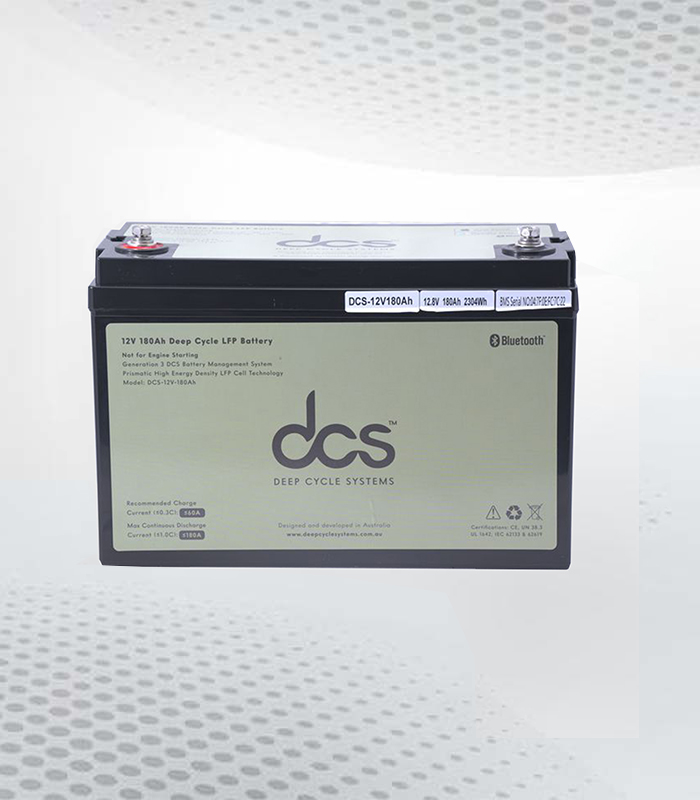 Moreover, a BMS actively manages the charging process, harmonising the charge across all cells to prevent imbalances that could lead to inefficiency and potential damage. By implementing a robust BMS, you ensure the stability and reliability of your solar energy storage, facilitating a smooth and efficient energy management system that stands the test of time.
Troubleshooting Common Issues with 180ah Deep Cycle Battery
When troubleshooting common issues with your 180ah Deep Cycle Battery, several key indicators signal a need for attention. First, check for loose or corroded connections if you notice a decline in the battery’s performance or capacity.
Loose connections can impede the flow of electricity, while corrosion can cause resistance, leading to inefficient charging and power supply. Should the battery exhibit unusually slow charging times, it could indicate sulphation, a condition where sulphate crystals form on its plates, reducing its effectiveness. It often occurs if the battery is left discharged for extended periods. Another common issue is over-discharging, which can cause permanent damage to the battery’s cells, diminishing its overall lifespan and efficiency.
To address this, ensure your usage aligns with the battery’s recommended depth of discharge and recharge the battery promptly after use. In instances where the battery seems not to hold a charge at all, it’s crucial to check the battery’s age and usage history, as it may have reached the end of its natural lifecycle and require replacement. For persistent issues that these troubleshooting steps do not resolve, consulting a professional technician is advisable to diagnose and rectify the problem accurately.
Understanding the Lifecycle of a 180-AH Solar Battery
A 180-ah Solar Battery’s lifecycle is a pivotal aspect of your solar power system, determining the period over which it delivers optimal performance. Typically, these batteries sustain a usable lifespan ranging from 5 to 7 years, subject to operational conditions and maintenance regimen. The lifecycle begins with the initial charge and continues until the battery can no longer hold a significant charge. Frequent deep discharges, exposure to extreme temperatures, and insufficient charging can curtail this duration.
Notably, the battery’s efficiency gradually diminishes over time, manifesting as reduced storage capacity. Monitoring this degradation process is essential, enabling timely interventions such as adjusting your energy usage or planning for battery replacement. By understanding and respecting the natural lifecycle of your 180-ah Solar Battery, you contribute to a sustainable energy solution, ensuring a consistent and reliable power supply throughout its serviceable years.
Upgrading Your Solar Battery System
As your energy needs evolve or advancements in solar technology emerge, upgrading your solar battery system becomes a consideration worth exploring. An upgrade might involve transitioning to a system with greater storage capacity, enhanced efficiency, or better durability against environmental factors.
It is crucial to thoroughly evaluate your current system’s performance, assessing areas such as energy storage capacity, charge cycles, and the overall condition of your 180-ah Solar Battery. Consulting with a solar energy expert can provide insights into the latest developments in solar battery technology and help identify an upgrade that aligns with your energy requirements and financial considerations.
Additionally, evaluating the compatibility of new components with your existing solar setup is essential to ensure seamless integration, thereby optimising the performance of your upgraded solar power system without compromising safety or efficiency.
Recycling Your 12v Battery 180ah
When the lifespan of your 180-ah Solar Battery ends, it’s essential to consider the environmental impact of disposal. Recycling is a responsible method to ensure that the components of your battery, which may include lead, acid, and other heavy metals, do not contaminate the environment.
Many regions offer recycling programmes specifically designed for batteries aimed at safely recovering and repurposing these materials. Contact your local waste management services or the retailer from whom you purchased the battery to enquire about available recycling options. Additionally, some manufacturers of solar batteries have take-back schemes that facilitate the recycling process for consumers.
The programmes contribute to the circular economy and often provide a discount on future purchases as an incentive for participation. Remember, improper battery disposal can lead to significant environmental and health hazards; thus, taking the initiative to recycle your 12v Battery 180ah is a crucial step towards sustainable energy usage and environmental stewardship.
Financial Incentives for Solar Battery Users
Exploring financial incentives is a beneficial step for solar battery users. Several schemes are designed to reduce upfront costs and enhance the economic viability of solar investments. Government programmes, tax reductions, and rebates are often available to homeowners and businesses that opt for renewable energy solutions, including installing a 180AH-solar battery.
Feed-in tariffs may also be accessible. These tariffs reward users for surplus energy fed back into the grid, thus lowering utility bills and potentially generating income. Researching local and national incentives is advisable, as these can significantly differ based on geographic location and specific energy policies. Engaging with renewable energy advisors or consulting utility providers can unveil opportunities tailored to your solar setup, making your green transition more affordable and rewarding.
Conclusion
Embracing a 180ah Solar Battery within your renewable energy setup advances your journey towards sustainability and equips your home or business with a robust power solution. The insights shared throughout this guide aim to empower users with the knowledge needed to ensure the battery’s optimal performance and durability. Engaging with the cycle of assessment, maintenance, and upgrade where necessary allows for a seamless adaptation to evolving energy needs, ensuring that your 180-ah Solar Battery remains a valuable asset in your pursuit of green energy.
FAQs
Q: What is the expected lifespan of a 180-ah Solar Battery under optimal conditions?
A: Typically, with diligent maintenance and favourable environmental conditions, a 180-ah Solar Battery can provide reliable service for 5 to 7 years. Proper use, avoiding deep discharges, and ensuring it operates within recommended temperatures can extend its lifespan.
Q: Is it possible to link several 12v 180a batteries for more power storage?
A: Linking multiple 180AH solar batteries in a parallel configuration is a feasible way to augment your system’s energy storage capacity. However, suitable cables and secure connections must be employed to maintain system safety and efficiency.
Q: What methods are available for tracking my 180-ah Solar Battery’s efficiency?
A: A battery management system (BMS) or specific battery monitoring tools can effectively monitor your solar battery’s efficiency and overall health. These devices offer valuable insights into the battery’s operational parameters, including its charge status, voltage levels, and ambient temperature, facilitating timely interventions when necessary.
| Other Good Articles to Read |
| Skank Blogs |
| Unreal Blogs |
| Tba Blogs |
| All City Forums |
| Dany Blogs |
| Refuge Blogs |
| The Music Blogs |
| Key Forums |
| The Big Blog Theory |
| Joe Blogs |
| Blogs 4 Me |
| Blogs Emon |
| Related Business Listings |
| Directory Submissions |
| Regional Directory |

